Back in 2001, I built my first offset smoker from scratch. No YouTube tutorials. No Facebook groups full of pit builders. Just steel, a welder, and the belief that I could figure it out.
I was right — eventually. But it took years of frustration, a pile of firewood, and some honest problem-solving to get there.
The Original Build
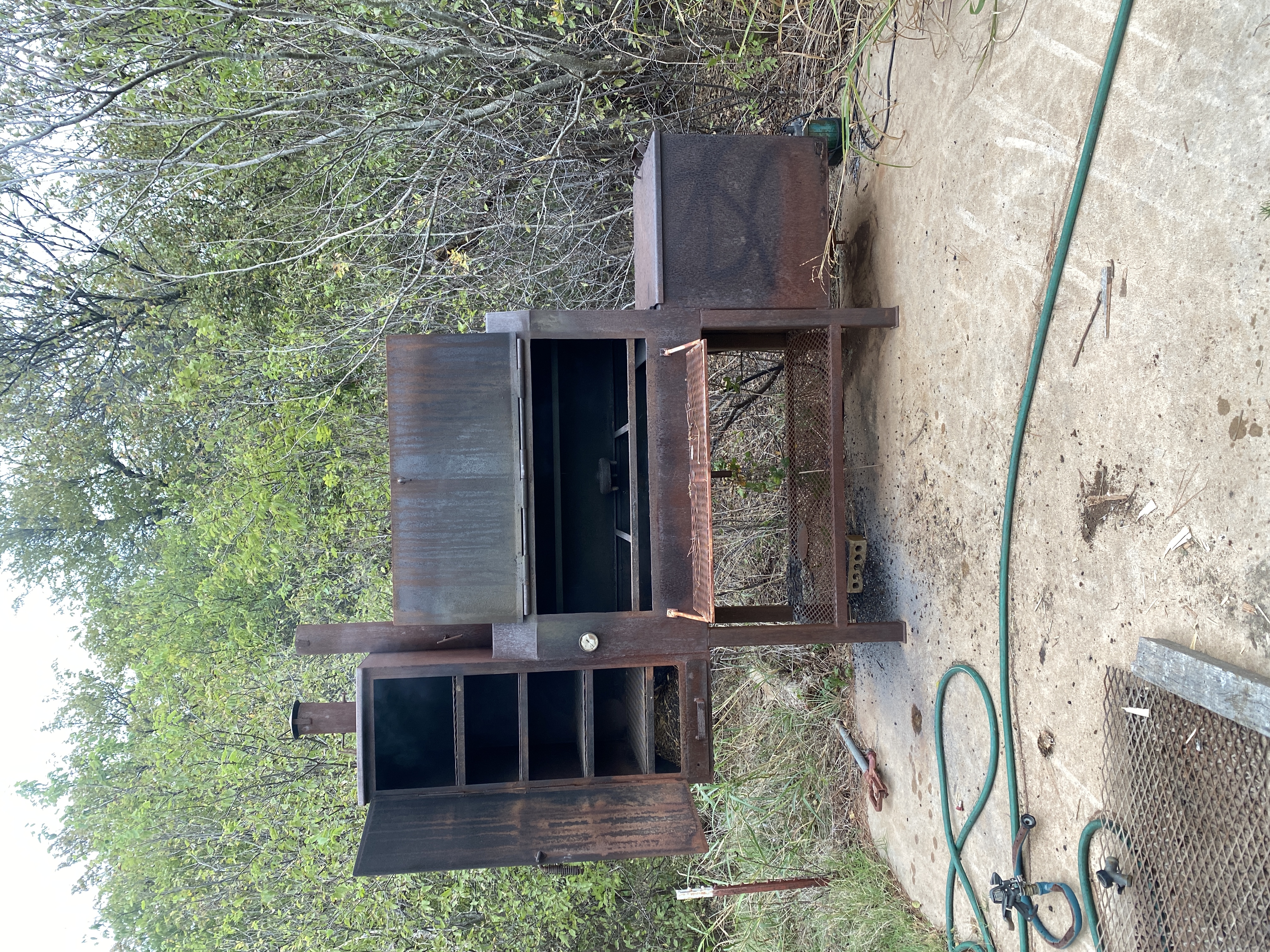
The ambition was there from day one. I built a serious cooker — a full-size cook chamber with a flip-up lid, a vertical warming and smoking cabinet on the left side with multiple shelves, and a firebox on the right. It looked the part.
And then I fired it up.
The problems showed up fast and didn't leave:
Bad draw. The draft was poor from the start. The stack placement and height weren't creating the negative pressure needed to pull heat and smoke cleanly through the cook chamber. Instead of a controlled, even flow, I had dead spots, back-puffing, and a fire that was hard to manage.
Poor heat retention. Without proper airflow, the fire was always playing catch-up. Temps would spike, drop, and spike again. Holding a steady 250° for a long cook was a battle every single time.
Wood consumption. This one hurt. Because the fire was constantly fighting poor draft and heat loss through air leaks, I was burning through wood at a rate that made long cooks expensive and exhausting. You'd feed that firebox and wonder where the BTUs were going.
The honest answer? Out every gap, crack, and poorly sealed joint in the cook chamber.
The Diagnosis
After enough bad cooks, I stopped blaming the wood and started looking at the cooker itself.
All three problems were connected. Poor draft meant the fire couldn't breathe efficiently. Air leaks meant heat escaped everywhere except where I needed it. The firebox was working against the design instead of with it.
The Fixes
I went back to the cooker with a welder and a plan.
Sealed the air leaks. Every gap and joint in the cook chamber got addressed. This alone made an immediate difference in heat retention. When the heat has nowhere to escape, it stays where you put it.
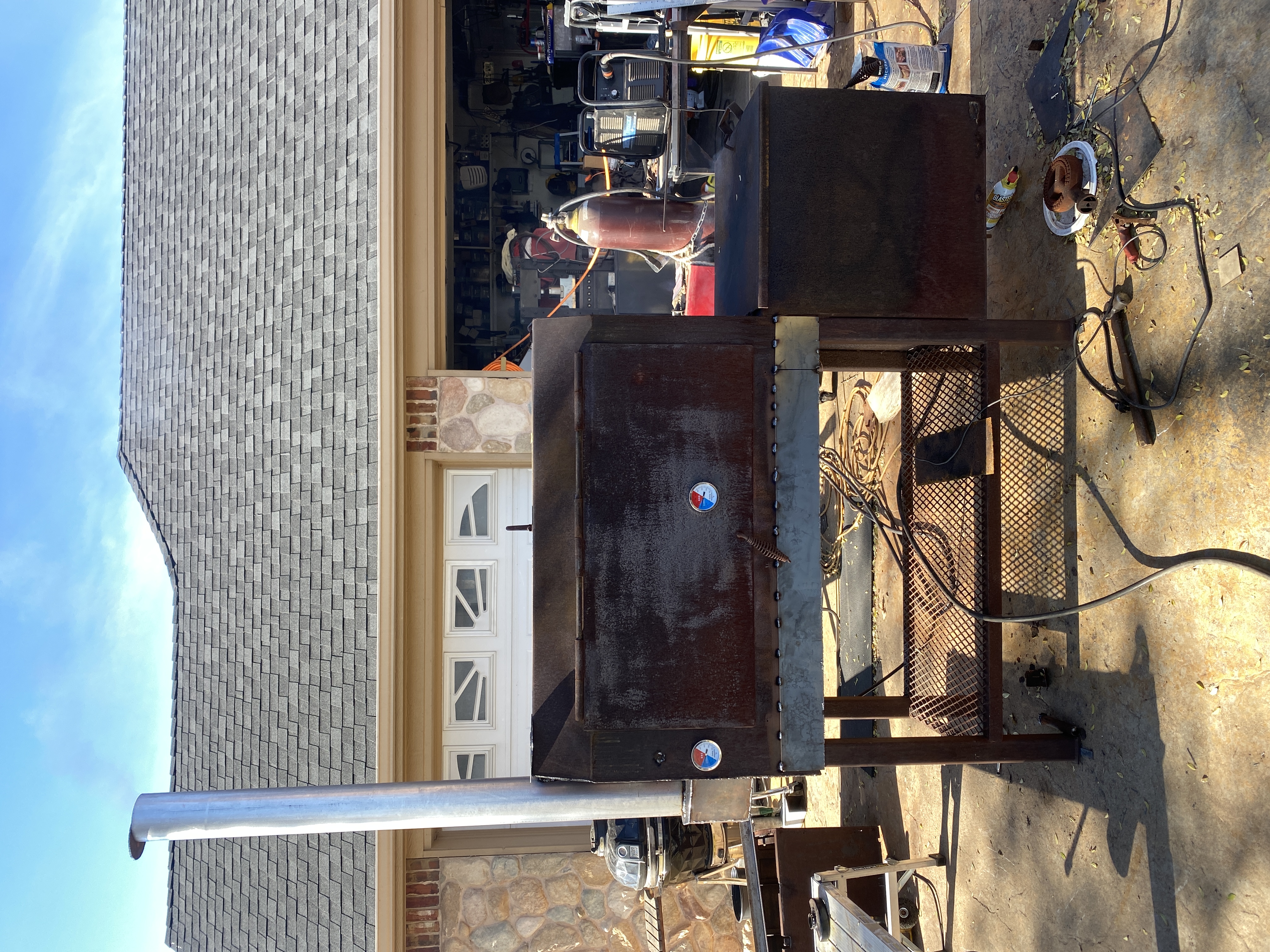
Raised and repositioned the stack. The original stack was too short and poorly positioned to create real draft. The new configuration uses a tall vertical stack that creates proper negative pressure, pulling heat and smoke evenly across the full length of the cook chamber.
Added an accumulator. This is the piece most backyard builders never think about. Built right at the stack attachment point, the accumulator acts as a transition chamber that smooths out the airflow before it exits. Instead of turbulent, uneven flow at the stack base, the smoke and heat move through in a more controlled, consistent way. It made a noticeable difference in both draw and how evenly the cook chamber held temperature.
The Result
The difference was significant. Draw improved dramatically. Heat retention went from a constant fight to something I could actually manage. And wood consumption dropped — I was finally getting the output I should have been getting all along.
The cooker that spent years frustrating me finally started performing the way I'd imagined it when I first drew it up.
What It Actually Taught Me
I could have scrapped it. A lot of guys would have. But that's not really how I'm wired.
My dad told me at graduation: Never say it can't be done. That stuck with me, and it's the philosophy this whole site is built around.
The smoker wasn't broken beyond fixing. It was a problem I hadn't fully understood yet. Once I understood it, I could solve it. That's true of most things.
If you're building your own offset and fighting similar issues — bad draft, uneven temps, burning through wood — start with the fundamentals: seal your leaks, get your stack height right, and think carefully about what's happening to airflow at every transition point. The fire will tell you what it needs if you're paying attention.
Twenty-plus years later, I'm still building. Still tweaking. Still learning. That's the whole point.